Picture this: You’re zipping through city streets on a bike that looks like it teleported from a sci-fi movie. Its front wheel has no spokes, the frame folds into a suitcase-sized package, and it’s powered by a whisper-quiet electric motor. This is the Kosmos Hubless F5—a crowdfunding sensation that’s equal parts mesmerizing and polarizing. But does this avant-garde e-bike deliver on its promises, or is it another overhyped gadget destined for the graveyard of failed tech? Let’s peel back the layers.
The Hubless Wheel: Engineering Marvel or Marketing Gimmick?
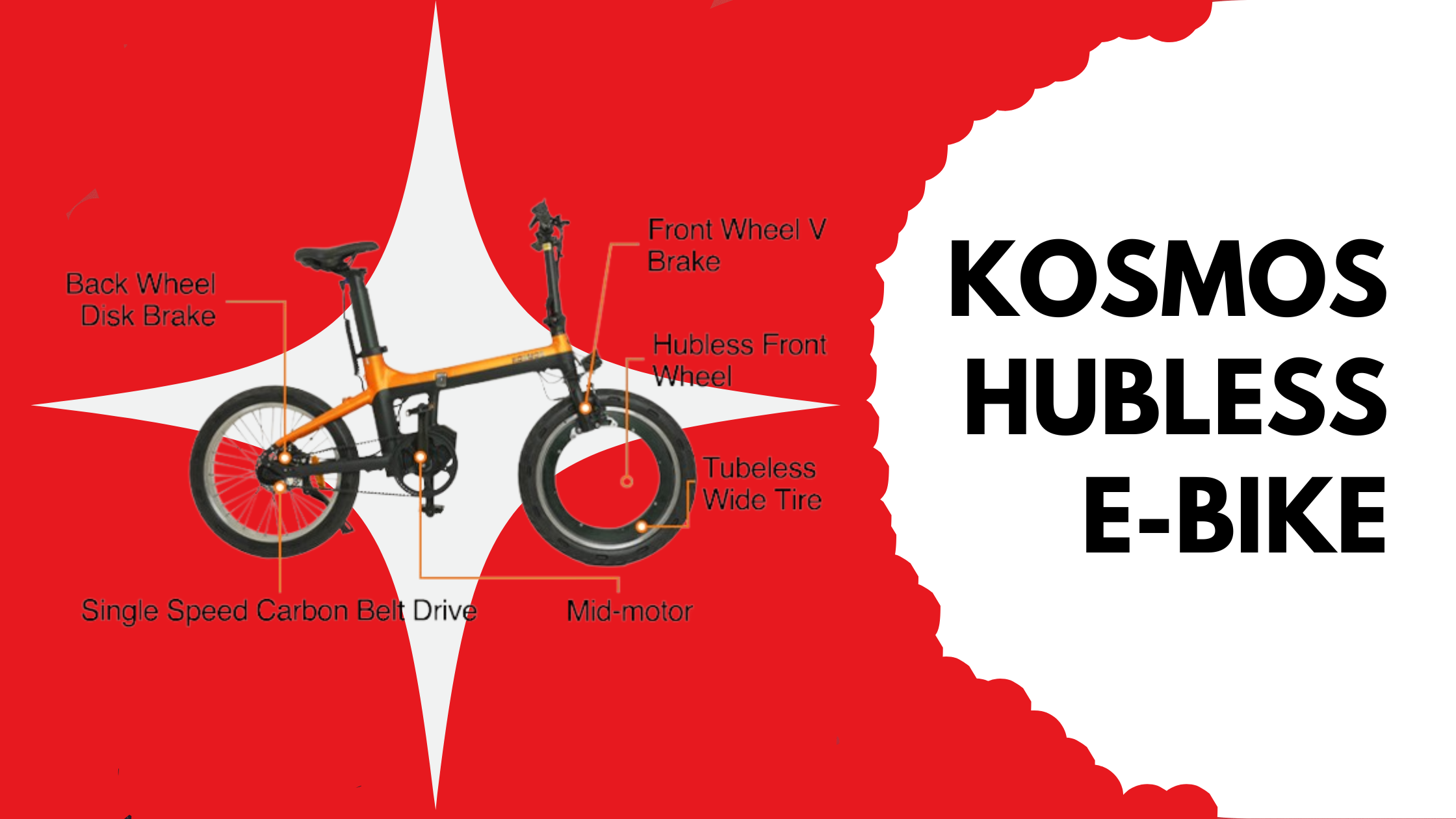
The Kosmos F5’s standout feature is its spoke-free front wheel, a design that replaces traditional hubs and spokes with a hollow, rotating ring. The result? A wheel that looks like it’s floating, paired with bold claims from Kosmos:
-
“30% lighter than conventional wheels!”
-
“Aerodynamic efficiency for faster rides!”
-
“Improved stability with a lower center of gravity!”
But here’s where things get murky.
Weight Savings? Not So Fast
While Kosmos boasts a 22 kg (48.5 lb) total weight, engineers point out a paradox: Hubless wheels often need more material to stay rigid. Reinforced aluminum or steel rings can add bulk, countering any weight savings from ditching spokes. For comparison, popular commuter e-bikes like the Ride1Up Turris weigh 26 kg (57 lbs) but pack larger batteries and sturdier frames.
Aerodynamics: A Trade-Off
Yes, fewer spokes mean less drag—but the hubless wheel’s chunky outer ring creates a larger surface area. Without wind-tunnel tests, Kosmos’ claims feel speculative. As one Reddit user joked, “It’s like saying a brick is aerodynamic because it has no wings.”
Stability: Questionable Physics
Kosmos argues the hubless design lowers the bike’s center of gravity. But hubs themselves weigh barely a pound—removing them wouldn’t dramatically shift balance. Cyclists familiar with gravity-focused designs (like low-slung cargo bikes) argue true stability comes from frame geometry, not wheel gimmicks.
Beyond the Wheel: Features That Shine (and Fizzle)
The F5 isn’t just about the hubless wheel. Let’s dissect its full package:
Foldability: Convenience or Compromise?
Kosmos says the bike folds in 10 seconds—a win for apartment dwellers. But foldable e-bikes often sacrifice rigidity. Compare it to the Brompton Electric, a folding icon with a cult following. The Brompton’s 16.6 kg (36.6 lb) weight and compact fold set a high bar the F5 struggles to match.
Motor and Battery: Middle of the Pack
-
Motor: A mid-drive motor (good for hills) or a hub motor (simpler, cheaper).
-
Range: Up to 46 miles—decent, but the Aventon Level.2 offers 60+ miles for $1,999.
-
Tires: Solid, airless rubber. Great for avoiding flats, but expect a rougher ride.
Brakes: A Safety Red Flag
The F5 uses a V-brake on the front hubless wheel and a disc brake at the rear. Most modern e-bikes rely on hydraulic discs for consistent stopping power. V-brakes, while cheaper, fade quickly in rain or steep descents—a worrying choice for a bike targeting urban commuters.
Crowdfunding Drama: Déjà Vu?
Kosmos launched the F5 on Kickstarter with a $1,500 early-bird price (half the projected retail cost). Yet, as of mid-2024, the campaign floundered with just 10 backers. Why the skepticism?
The Ghost of the Reevo E-Bike
In 2022, the Reevo Hubless E-Bike made similar promises—and became a cautionary tale. Backers reported:
-
Noise: The hubless wheel screeched like “nails on a chalkboard.”
-
Brake Failures: “Stopping power of a wet noodle,” wrote one user.
-
Unrepairable Parts: Proprietary components meant $500+ repair bills.
Kosmos hasn’t explained how the F5 avoids these pitfalls.
Vaporware Vibes
The F5’s renders are slick, but prototypes are MIA. As Kickstarter veteran @TechTruth2024 tweeted: “No demo videos? No third-party reviews? Smells like another Reevo.”
Hubless Wheels in 2024: Why They’re Still Niche
The e-bike market is exploding—sales hit $30 billion in 2023—but hubless designs remain fringe. Here’s why:
1. Cost vs. Benefit
Hubless wheels demand expensive CNC machining. The Vintage Electric Bike’s $7,000 “hubless” model flopped because riders refused to pay a premium for aesthetics.
2. Maintenance Nightmares
Local bike shops can’t fix proprietary hubless systems. Contrast that with brands like Rad Power Bikes, which sell parts directly and partner with 1,000+ repair shops.
3. Safety Standards
Regulators prioritize UL-certified batteries and collision sensors—features the F5 lacks. The Specialized Turbo Vado 4.0 ($3,500) packs these extras, making it a safer (if less flashy) choice.
Should You Buy the Kosmos F5? A Brutally Honest Guide
For Whom It Might Work
-
Design Obsessives: If you crave Instagram attention, this bike delivers.
-
Short Commuters: Sub-10-mile riders who value foldability.
-
Risk-Takers: Early adopters who don’t mind beta-testing.
For Whom It’s a Hard Pass
-
Practical Riders: The Lectric XP 3.0 ($999) offers similar specs without the drama.
-
Hill Warriors: The F5’s mid-drive motor can’t match the torque of a Gazelle Medeo T10+.
-
Budget-Conscious Buyers: At $1,500+, it’s pricier than proven models like the Juiced CrossCurrent X.
The Verdict: Innovation Needs Substance
The Kosmos Hubless F5 is a Rorschach test for e-bike enthusiasts. To some, it’s a daring leap into the future. To others, it’s a shiny distraction from what riders actually need: reliability, affordability, and serviceability.
History isn’t on its side. The Reevo debacle, coupled with the F5’s lack of transparency, suggests hubless wheels remain a solution in search of a problem. Until Kosmos releases hard data—crash tests, battery certifications, repair guides—this bike is best admired from afar.
In the end, true innovation isn’t about reinventing the wheel. It’s about making wheels better. The F5 hasn’t cleared that bar yet.