Introduction
Samsung has consistently pushed the boundaries of smartphone innovation, and the upcoming Galaxy S26 Ultra is expected to be no exception. Although the official launch is likely over a year away, early leaks and rumors have already started painting an exciting picture of what to expect from Samsung’s next flagship.
From groundbreaking camera upgrades to next-gen AI capabilities and a refined design, the Galaxy S26 Ultra could set a new standard for premium smartphones. In this article, we’ll dive deep into the latest leaks, expected specifications, design changes, and potential release timeline.
Design & Build: A More Premium Look
1. Sleeker & More Durable Design
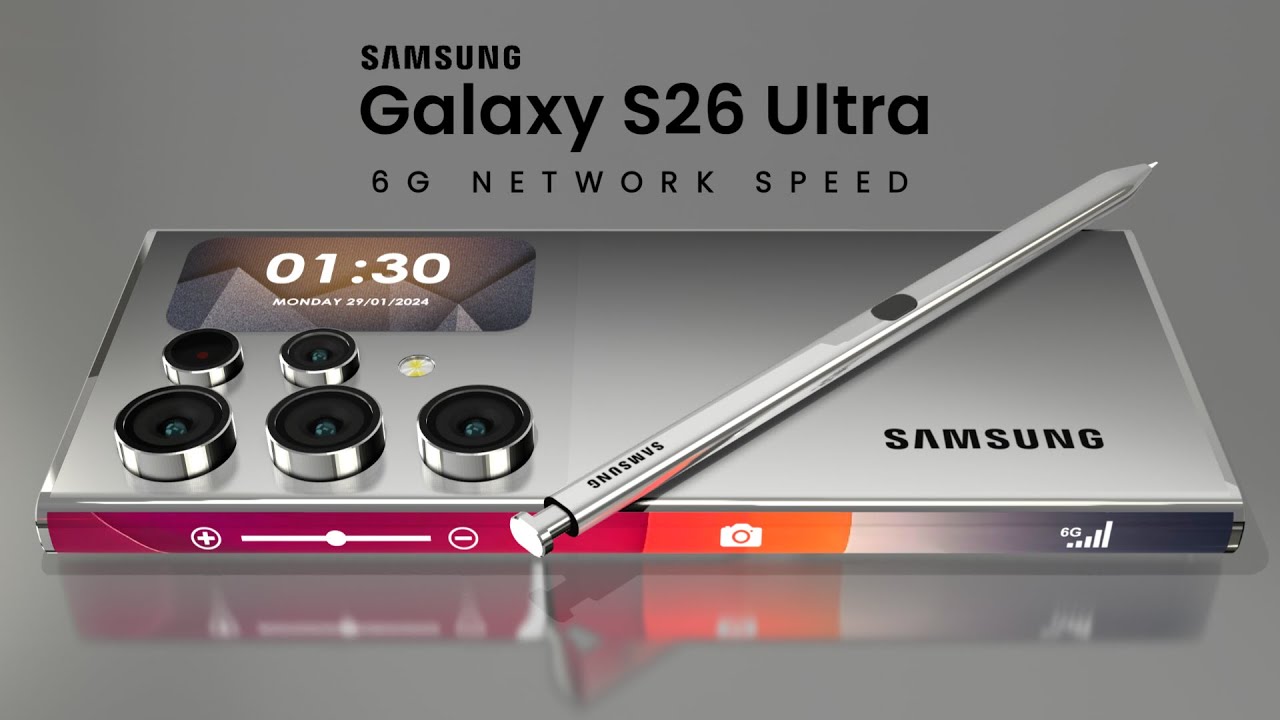
According to industry insiders, the Galaxy S26 Ultra will feature a more refined design with slimmer bezels and a flatter display compared to its predecessor. Samsung may also introduce a titanium frame, similar to the iPhone 15 Pro, making the device lighter yet more durable.
2. Improved Display Technology
The S26 Ultra is expected to retain Samsung’s signature Dynamic AMOLED 2X display but with significant upgrades:
-
6.9-inch QHD+ panel (slightly larger than the S24 Ultra)
-
3000 nits peak brightness for better outdoor visibility
-
Adaptive 1-144Hz LTPO refresh rate for smoother scrolling and power efficiency
-
Under-display camera (UDC) technology for a truly bezel-less experience
3. Enhanced S Pen Integration
The S Pen will likely see further refinements, with lower latency and new AI-powered features for productivity and creativity.
Performance: Next-Level Speed & AI Capabilities
1. Snapdragon 8 Gen 4 or Exynos 2500?
Samsung traditionally uses both Qualcomm Snapdragon and Exynos chipsets depending on the region. For the S26 Ultra, two possibilities exist:
-
Snapdragon 8 Gen 4 (built on TSMC’s 3nm process, 30% faster CPU & GPU)
-
Exynos 2500 (if Samsung improves yield rates, may feature a powerful AMD-based GPU)
2. AI & Machine Learning Upgrades
Following the success of Galaxy AI in the S24 series, the S26 Ultra will likely introduce:
-
On-device AI processing for faster responses
-
Advanced real-time language translation
-
AI-powered camera optimizations (scene recognition, enhanced night mode)
-
Predictive AI for battery and performance management
3. RAM & Storage Options
-
16GB LPDDR5X RAM (base model)
-
Up to 1TB UFS 4.0 storage (possibly 2TB variant)
Camera: The Biggest Leap Yet?
1. Quad-Camera System with a 300MP Sensor
Rumors suggest Samsung may finally introduce a 300MP primary sensor, surpassing the current 200MP shooter. The setup could include:
-
300MP wide lens (f/1.4, OIS, laser AF)
-
50MP periscope telephoto (10x optical zoom, 100x hybrid zoom)
-
12MP ultra-wide (140° FoV)
-
50MP telephoto (3x optical zoom)
2. AI-Powered Computational Photography
-
Real-time HDR++ for videos
-
AI-based noise reduction in low light
-
Pro-grade video stabilization (8K@60fps)
3. Under-Display Selfie Camera
If Samsung perfects UDC tech, the front camera could be invisible, allowing for a completely uninterrupted display.
Battery & Charging: Faster & More Efficient
1. Larger Battery with Optimized Efficiency
-
5,500mAh battery (up from 5,000mAh in S24 Ultra)
-
30% more efficient due to 3nm chipset
2. Blazing-Fast Charging
-
65W wired charging (0-100% in ~35 mins)
-
50W wireless charging
-
Reverse wireless charging improvements
Software: One UI 7 & Android 16
The Galaxy S26 Ultra will likely debut with One UI 7 based on Android 16, featuring:
-
Enhanced DeX mode (desktop-like experience)
-
More AI-driven customization
-
Better multi-tasking with improved window management
Expected Price & Release Date
1. Launch Timeline
-
Expected Announcement: January 2026
-
Market Availability: February 2026
2. Pricing
-
Starting at $1,399 (256GB model)
-
$1,599 (512GB)
-
$1,799 (1TB)
Conclusion: Is the Galaxy S26 Ultra Worth the Wait?
Based on current leaks, the Samsung Galaxy S26 Ultra is shaping up to be a powerhouse with cutting-edge AI, a revolutionary camera system, and a futuristic design. If Samsung delivers on these rumors, it could be one of the most advanced smartphones of 2026.
For now, fans should keep an eye on further leaks, but one thing is certain—Samsung is not slowing down in the flagship race.
Would you upgrade to the Galaxy S26 Ultra? Let us know in the comments!
Disclaimer: This article is based on leaks and rumors. Official details may vary upon Samsung’s announcement.
And Here is the other information about Samsung!
AGAIN Introduction
Samsung is one of the world’s most influential and innovative technology companies, with a global presence spanning electronics, semiconductors, telecommunications, and more. Founded in 1938, Samsung has grown from a small trading company into a multinational conglomerate, shaping industries and setting benchmarks in innovation.
This article provides an in-depth look at Samsung’s history, business divisions, key achievements, corporate philosophy, and global impact—ensuring a complete understanding of why Samsung remains a leader in the tech world.
History of Samsung
1. Early Beginnings (1938–1960s)
Samsung was founded on March 1, 1938, by Lee Byung-chul in Daegu, Korea. Initially, it was a small trading company dealing in groceries, dried fish, and noodles. The name “Samsung” means “three stars” in Korean, symbolizing something “powerful and everlasting.”
In the 1950s and 1960s, Samsung expanded into industries like textiles, insurance, and retail, laying the foundation for future diversification.
2. Entry into Electronics (1960s–1980s)
Samsung entered the electronics industry in the late 1960s with the establishment of:
-
Samsung Electronics (1969) – Started producing black-and-white TVs.
-
Samsung Semiconductor (1974) – Began chip manufacturing.
By the 1980s, Samsung became a major player in consumer electronics, producing color TVs, microwaves, and refrigerators.
3. Global Expansion & Technological Leadership (1990s–Present)
The 1990s marked Samsung’s rise as a global tech giant. Key milestones include:
-
Launching its first mobile phone (1988).
-
Becoming the world’s largest memory chip producer (1992).
-
Introducing the Galaxy smartphone series (2009), competing with Apple’s iPhone.
Today, Samsung is a leader in smartphones, semiconductors, displays, and home appliances.
Samsung’s Business Divisions
Samsung operates through multiple subsidiaries, but its core businesses include:
1. Samsung Electronics
The most profitable division, responsible for:
-
Mobile (Galaxy smartphones, tablets, wearables)
-
Consumer Electronics (QLED TVs, refrigerators, washing machines)
-
Semiconductors (Memory chips, Exynos processors)
-
Displays (OLED panels for smartphones & TVs)
2. Samsung Heavy Industries
A major player in shipbuilding, offshore platforms, and renewable energy solutions.
3. Samsung SDI
Specializes in battery technology, supplying electric vehicle (EV) batteries to companies like BMW and Tesla.
4. Samsung Biologics
A leading biopharmaceutical company involved in vaccine and drug manufacturing.
5. Samsung C&T (Construction & Trading)
Handles large-scale infrastructure projects, including skyscrapers and energy plants.
Key Achievements & Innovations
1. Smartphone Dominance
-
Galaxy S Series – Competing directly with Apple’s iPhone.
-
Foldable Phones – Pioneered with the Galaxy Z Fold and Z Flip.
-
5G Leadership – Early adoption and innovation in 5G technology.
2. Semiconductor Leadership
-
World’s largest DRAM and NAND flash memory supplier.
-
Produces chips for Apple, NVIDIA, and Qualcomm.
3. Display Technology
-
OLED dominance – Supplies screens for iPhones and its own Galaxy devices.
-
QD-OLED TVs – Next-gen display technology surpassing LG’s OLED.
4. AI & Software Innovations
-
Bixby – Samsung’s AI voice assistant.
-
One UI – A user-friendly Android skin.
-
SmartThings – IoT ecosystem for connected homes.
Corporate Philosophy & Vision
1. Mission Statement
“Inspire the world, create the future.”
Samsung aims to drive innovation that improves global lifestyles.
2. Core Values
-
People – Talent and teamwork drive success.
-
Excellence – Commitment to quality and innovation.
-
Integrity – Ethical business practices.
-
Co-prosperity – Contributing to society.
3. Sustainability Efforts
-
Net-zero carbon emissions by 2050.
-
Eco-friendly packaging for products.
-
Recycling programs for old electronics.
Samsung’s Global Impact
1. Economic Influence
-
Revenue (2023): $245 billion.
-
Employees: Over 270,000 worldwide.
-
Market Cap: Among the top 10 global companies.
2. Research & Development (R&D)
-
Invests $20+ billion annually in R&D.
-
Operates AI research centers in the U.S., U.K., and Canada.
3. Competition & Market Position
-
Smartphones: Competes with Apple, Xiaomi, and Huawei.
-
Semiconductors: Rivals TSMC and Intel.
-
TVs & Appliances: Competes with LG and Sony.
Challenges & Controversies
Despite its success, Samsung has faced challenges:
-
Battery explosions (Galaxy Note 7, 2016) – Led to a global recall.
-
Legal disputes with Apple – Patent wars over smartphone designs.
-
Corporate corruption scandals – Involved former executives in bribery cases.
However, Samsung has recovered through transparency and innovation.
Future Outlook
Samsung continues to invest in:
-
AI & robotics (e.g., Samsung Bot Handy).
-
6G connectivity (planned for 2030).
-
Quantum computing & advanced chip manufacturing.
With its diversified business model, Samsung is well-positioned to remain a tech leader.
Conclusion
From its humble beginnings in 1938 to becoming a global tech titan, Samsung’s journey is a testament to innovation, resilience, and adaptability. With strong leadership, cutting-edge technology, and a commitment to sustainability, Samsung is poised to shape the future of electronics, AI, and beyond.
Whether through smartphones, semiconductors, or smart home solutions, Samsung’s influence on modern technology is undeniable—and its legacy continues to grow